
This is How to Be Everything
Reviewing Emilie Wapnick's multipotentialite manual

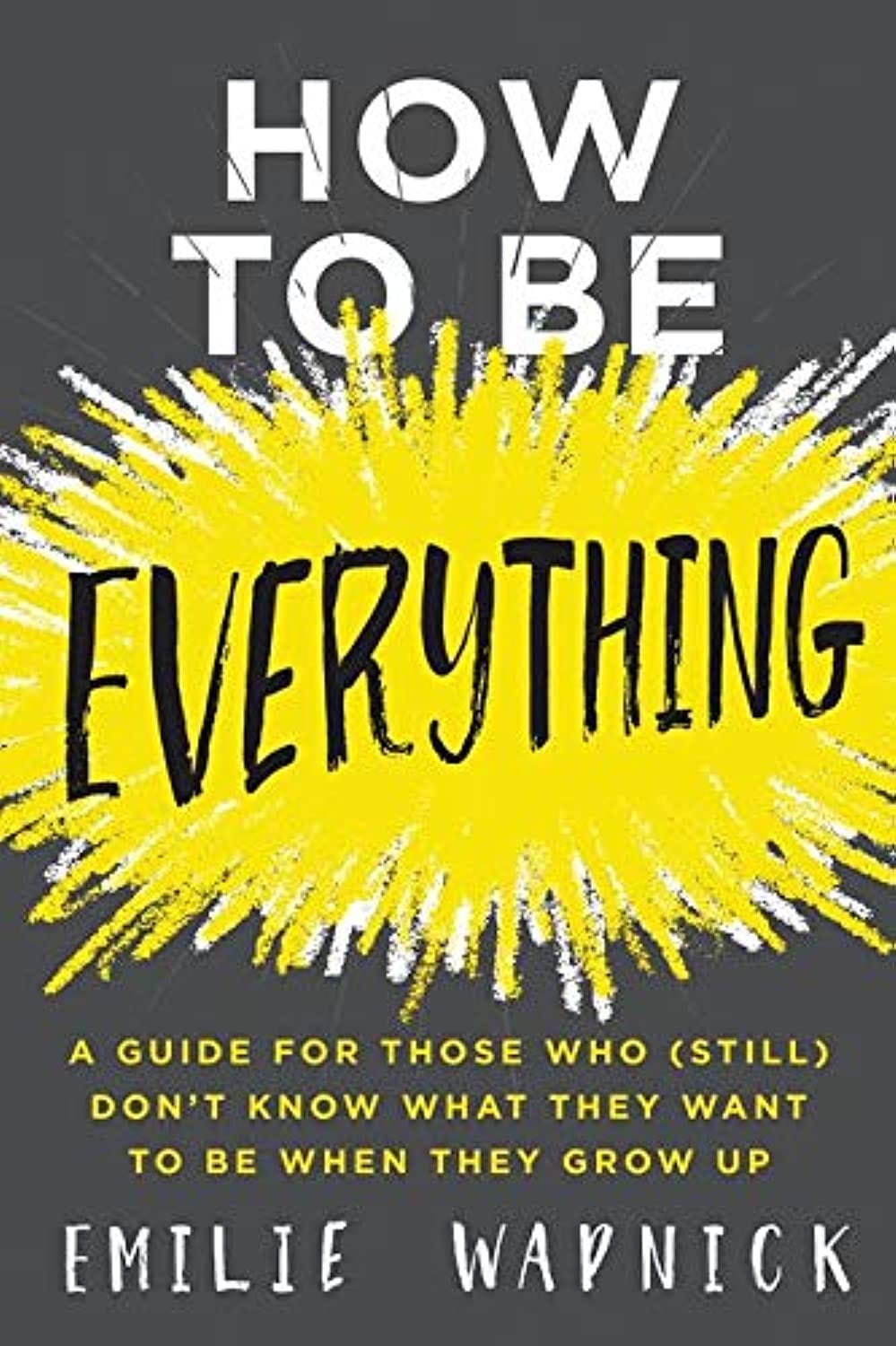
For those of us with multiple creative passions, a book called How to Be Everything is sure to catch our attention. “Being everything” is the dream, after all. Author Emilie Wapnick believes that it is possible—though not necessarily easy, and certainly not common—for us “multipotentialites” to craft careers that fulfill our desire for variety while also supporting us financially. No starving artists here!
But is Wapnick’s book, published in 2017, still applicable in 2025? And is her advice truly feasible, or mere fluff?
The Premise
In the immortal words of Britney Spears, there are only two kinds of people in the world: but they’re “straight arrows” and “multipotentialites,” according to Wapnick. Straight Arrows are the majority who stick with a single career for their working lives and aim to climb as high in the profession as possible. Multipotentialites, on the other hand—a term Wapnick didn’t coin, but did popularize—have many disparate interests, crave variety, and therefore don’t believe they have one single calling. Both are (supposedly) inherent, god-given dispositions. In a society that favors straight-arrow specialists, generalist multipotentialites may feel lost and unfulfilled if they take the conventional career route.
Given the nature of this newsletter, of course I understand Wapnick’s premise, but I don’t exactly agree with it. I don’t think I’ve ever met a person who wasn’t a multipotentialite; in fact, my whole spiel is that every one of us has infinite potential that deserves to be realized—it’s just that some people feel a stronger need to realize it than others.
Take my father, who has been an automotive mechanic for 40 years and is an expert in his trade. He spends his weekends either restoring antique firearms or making sausage from scratch. Is he not a multipotentialite? Or my favorite college professor, a brilliant essayist and scholar in a fairly niche field who started learning classical guitar in her 50s and claims “rockstar” was her backup career. Teaching, writing, research, music…is she not also a multipotentialite?
Maybe it doesn’t matter, ultimately, whether Wapnick’s dichotomy is true, so long as the people who could benefit from this book find it. However, splitting the population into two opposing factions, both of whom were “born that way,” may alienate those in the murky middle.
The Procedure
The most valuable section of How to Be Everything is where Wapnick outlines four approaches to career building that could satisfy multipotentialites. They are:
The Group Hug: Pursue a single career that requires a wide range of skills and roles; e.g., entrepreneurship, which requires business skills, like marketing and accounting, and creative skills, like product design and innovation.
The Slash Approach: Have multiple part-time careers simultaneously that add up to a full-time income. For example: Spend a few days a week as a personal trainer while working on your freelance writing business the other days.
The Einstein: Maintain one “good enough” full-time job while spending time on your passions during the evenings and weekends. This one is self explanatory :)
The Phoenix: Focus on a single career path at a time, but change careers when you reach your goal or no longer feel fulfilled. For example: Teach elementary school for a while; then open a bakery; then sell the bakery and try your hand at digital marketing.
I’m an Einstein (insert joke about how appropriate that is here). I love the stability of a predictable biweekly paycheck, so much so that even if I could survive solely on writing and content creation, I wouldn’t actually want to. (So does this make me a Straight Arrow? I would like to be at the top of my day-job field too…) Although I already knew this fact about myself, it was still helpful to hear of other approaches, compare them, and consider if my chosen approach needed tweaking. People brand new to the idea of embracing a multifaceted career would certainly benefit from such clear explanations of potential paths, even if only in the relief of knowing they have options.
Following the chapters on each approach are respective complementary chapters detailing how exactly we multipotentialites can go about embarking on our chosen paths: things like career research, emphasizing soft skills, knowing when to quit. (I’m not so sure I can get behind Wapnick’s suggestion that Phoenixes work for free in order to gain experience for their next “rebirth,” but I digress.) Not all of the advice in this section will be applicable to every reader, but again, having a plethora of ideas and tactics laid out in an easy-to-reference format eases the confusion a career-changer or career-starter may have.

The Pitch
I’d be remiss not to mention the subtle sales pitch Wapnick sprinkles throughout the book. How to Be Everything began as a 2015 TedTalk, which began as an online community for multipotentialites called Puttylike, which Wapnick founded in 2010. The book is clearly intended to funnel readers to the community—which costs $29 per month, or “less than $21 a month if you invest in an annual membership” according to its FAQ (so $240? It’s not specified). The “Puttyverse” offers forums, workshops, and in-person/virtual events, not to mention “a warm, vibrant community of like-minded people.”
Mercifully, Wapnick’s nods to the community aren’t aggressive and, for the most part, blend into the writing with a “blink and you’ll miss it” smoothness. By no means do I think it’s a sin to point readers to a relevant resource, even if the author profits from it, but I do think they should be aware that there’s more to the book than meets the eye.
The Verdict
Is Emilie Wapnick’s How to Be Everything worth a read for us multi-passio..er, multipotentialite creatives? Yes it is, particularly if you’re new to the possibility of an alternative career path (though what’s alternative anymore?). Wapnick’s advice is not necessarily groundbreaking, but it is clear, approachable, and actionable, which is precisely what an overwhelmed multipotentialite needs.
Unlike most books in the self-improvement/career genre, How to Be Everything is not primarily concerned with making money, never mind getting rich. From the outset, Wapnick prioritizes creative and intellectual fulfillment over income, while avoiding the all too common mistake of glamorizing a starving-artist lifestyle: don’t risk your next meal to become a basket-weaving-break-dancing-therapist. This perspective is refreshing, especially after the onslaught of such wealth-worshipping titles as Tim Feriss’s The 4 Hour Workweek or Ramit Sethi’s I Will Teach You to Be Rich. I can forgive the sales pitches.
According to the Puttylike website, Wapnick’s TedTalk has been viewed over eight million times; the paid community has over 600 members. Despite the premise that generalists and creatives are the minority, given those numbers…perhaps there are more of us than we realize.
Until next time!

i downloaded the audiobook from my library & started it immediately.
so far i am enjoying it. i'm an einstein with a huge serving of group hug.
i think she's been transparent about the her intentions
"give me an honest conman (con-human?) anytime"
-jd salinger
good rec!
tbh, i enjoyed your post about the book more than the actual book. you crafted a useful & nuanced review. i'll keep listening though. unfortunately, the author does not narrate.
Hello Jo! Found your substack through your youtube lol 😂 two of the paths mentioned above appeal to my senses: Einstein and Phoenix. Although it's yet to be discovered which one I'm gonna be (it's scary eeekkkk🫣). But I loved your advice on YouTube about learning as waging a war against brain rot. <33 Charge! ⚔️